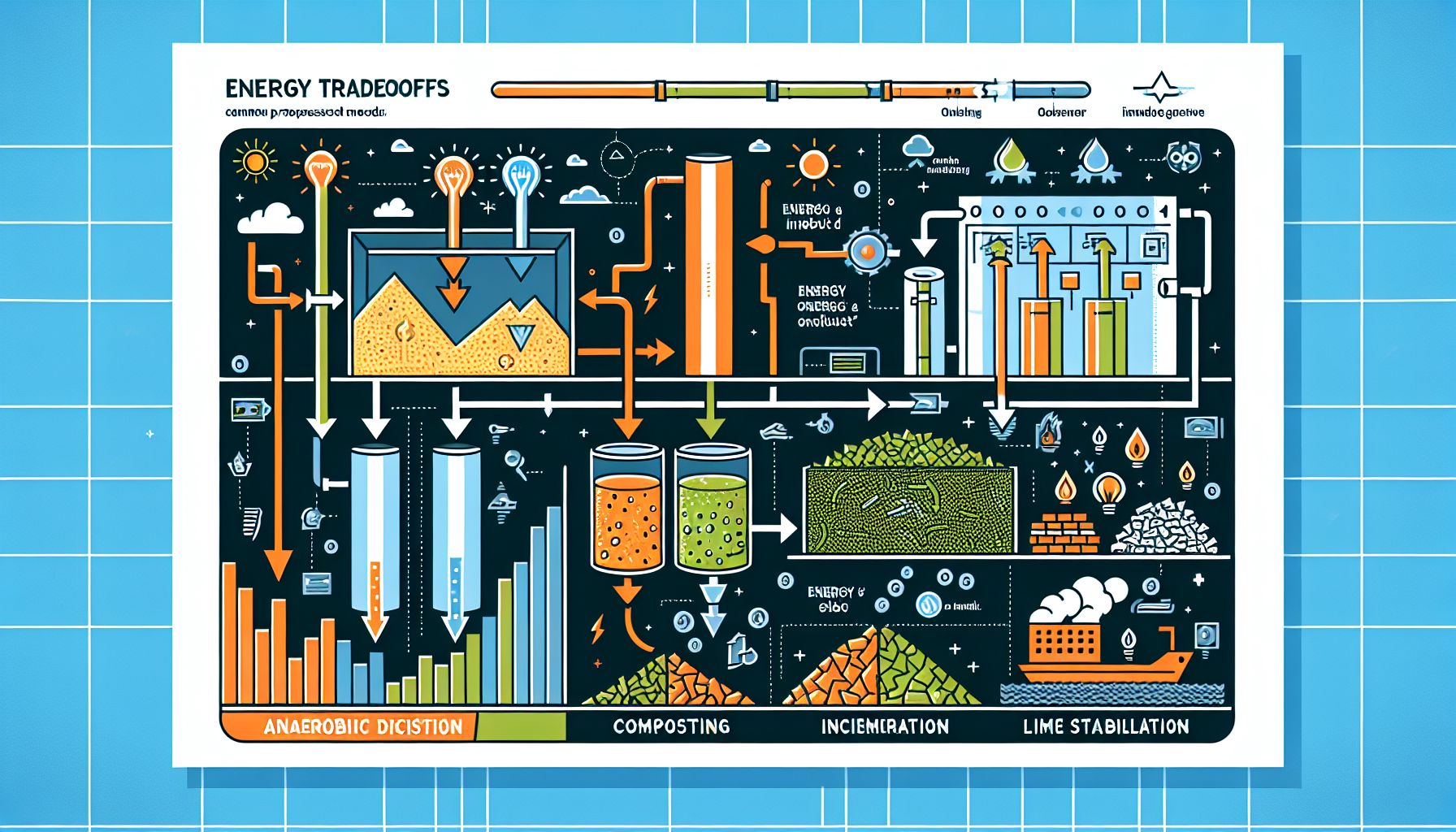
The management of wastewater sludge presents a range of challenges and opportunities for industries. Though often seen as waste, sludge has potential energy content that can be harnessed through various processing methods. However, these methods also demonstrate varying levels of energy efficiency and environmental impacts. This article delves into the energy trade-offs involved in the most common sludge processing methods: Anaerobic digestion, Incineration, and Thermal drying.
Anaerobic Digestion
Anaerobic digestion is a process where microorganisms decompose organic matter in the absence of oxygen. Its main products are biogas – a mixture of methane and carbon dioxide – and a nutrient-rich sludge known as digestate.
The primary advantage of anaerobic digestion is it provides a renewable energy source in the form of biogas, which can be used for heat, power, or converted into other forms of energy. It also results in significantly reduced sludge volumes and the production of safe biosolids for agricultural use.
However, anaerobic digestion requires substantial energy input to maintain optimal operating conditions – typically mesophilic (30-38°C) or thermophilic (49-60°C). Energy is also needed for mixing and pumping digesters.
A comprehensive industrial energy efficiency guidance can help industries optimize both energy consumption and gas production in this process.
Incineration
Incineration involves the burning of sludge at high temperatures (850-1200°C), reducing it to ash, flue gases, and heat. Some of this heat can be captured and utilized to produce steam for generating electricity, thereby making the incineration process more energy efficient.
Incineration provides an excellent solution for sludge disposal as it reduces the sludge volume by almost 90%. The resulting ash can be reused in the construction sector.
Nonetheless, incineration is energy-intensive and requires appropriate air pollution control systems to manage harmful emissions. This means that while the process can generate energy, its overall energy balance may still be negative.
Thermal Drying
Thermal drying is a sludge treatment process where heat is applied to the sludge to remove water, reducing its volume and weight, and essentially turning it into a fuel source.
Thermal drying allows for the complete sanitization of the sludge, making it possible to be used as a soil conditioner or a source of renewable energy.
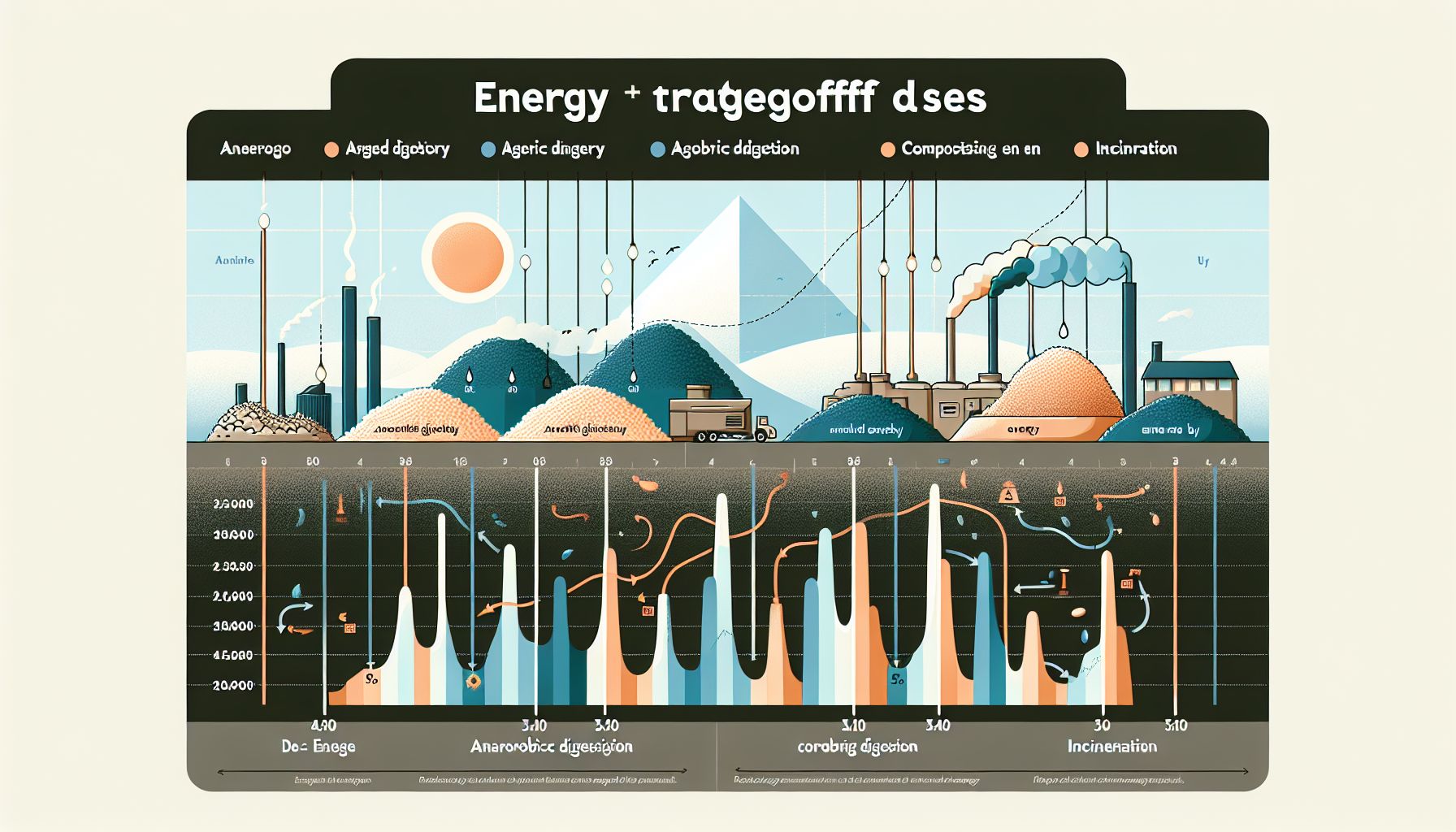
Alongside these benefits, one has to consider that thermal drying is also an energy-intensive process. A significant amount of heat is required to evaporate the water content in the sludge. Apart from this, moisture reabsorption can occur during storage and cooling, leading to potential energy losses.
A study by the Environmental Protection Agency provided more insight into such energy trade-offs faced in the thermal drying process.
Wrap Up
The final choice for a sludge treatment process greatly depends on a host of factors such as available energy sources, potential use of by-products, economic viability, environmental regulations, and public acceptance.
Furthermore, developments in technology are opening new possibilities for sludge treatment and energy recovery – providing us with options and challenges that enrich our understanding of this critical issue.
As noted by the Department of Energy, it is the continued research in the field of waste-to-energy that will eventually steer us towards establishing the most energy-efficient practices for sludge processing.