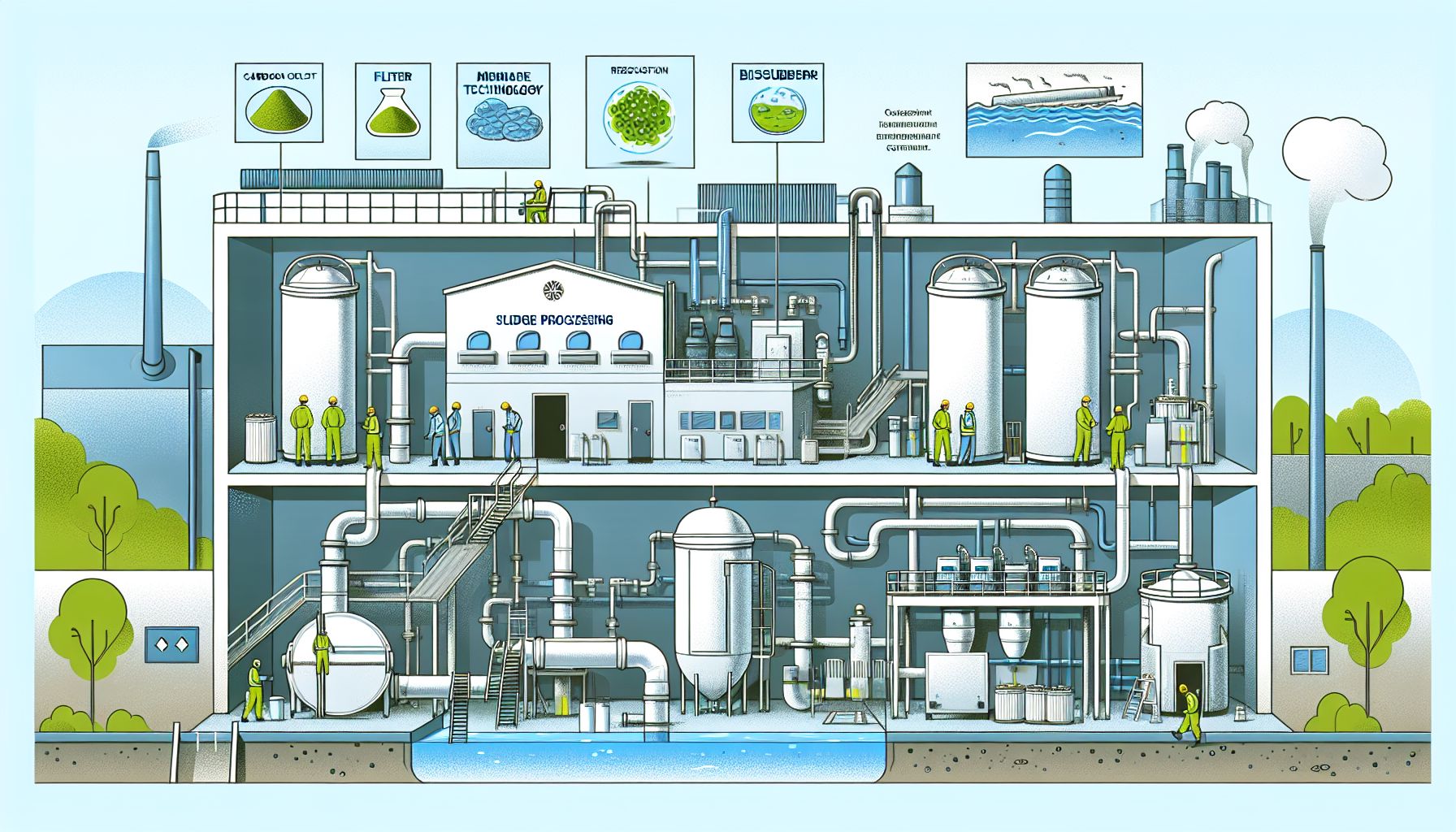
Sludge processing can result in the formation of unpleasant odors, due to the presence of volatile organic compounds and other foul-smelling substances. This article explores the causes of these malodors, their impacts on the surrounding environment, and effective ways to control or eliminate them in wastewater treatment plants.
Odor Formation in Sludge Processing
Formation of odors is an intrinsic part of the sludge digestion process. Biodegradation of organic material, sludge stabilization, and other treatment processes can lead to the production of volatile compounds, including hydrogen sulfide, ammonia, mercaptans, and skatoles. These components are primarily responsible for the unpleasant smells frequently associated with sludge processing.
Wastewater sludge typically undergoes anaerobic digestion, a process that breaks down organic material in the absence of oxygen. This process, while important for waste treatment, can result in the production of sulfur-containing compounds such as hydrogen sulfide, which can imparts a characteristic “rotten egg” smell.
Impacts of Odor Emissions
Chronic exposure to these malodorous substances can cause headaches, nausea, and fatigue among workers in wastewater treatment facilities. The foul odors can also extend to the surrounding environment, leading to nuisance complaints from neighboring residential and commercial areas. Extended odor exposure may potentially contribute to more severe health issues, which underscores the importance of proper odor control.
The odor exposure guidance by the Centers for Disease Control and Prevention provides more details on the health risks posed by various odor-causing compounds and recommendations for appropriate exposure limits.
Odor Control Strategies in Sludge Processing
Effective odor management strategies should address the generation, emission, and dispersion of foul-smelling compounds. This typically involves a combination of process optimization, containment measures, and odor treatment.
Process Optimization
Firstly, the sludge treatment process itself can be optimized to reduce the production of volatile compounds. Maintaining appropriate pH levels, temperature conditions, and retention times can help minimize the formation of smell-inducing compounds like hydrogen sulfide.
Containment Measures
Enclosing the source of the odor or creating a negative pressure environment are also effective containment measures. Sludge holding and processing tanks can be covered, and buildings housing other odor sources can be sealed to prevent the escape of foul odors.
Ventilation systems can then be used to capture the contained odors for subsequent odor treatment.
Odor Treatment
Finally, odors captured from these sources need to be treated and neutralized. Techniques such as adsorption, biofiltration, and chemical scrubbing are commonly used.
In adsorption, charcoal or other porous materials are used to physically capture malodorous compounds. Chemical scrubbing uses a scrubber solution to chemically react with the odor molecules and neutralize them. Biofiltration, on the other hand, leverages microorganisms to enzymatically degrade volatile compounds into less malodorous forms.
According to a publication by the University of Massachusetts, biofiltration has been found to be an effective and eco-friendly option for odor control in wastewater treatment settings.
Implementing an Odor Control Strategy: Operational Considerations
While each of these methods has its advantages, the choice of an odor control strategy depends on several factors. These include the specific odors to be addressed, severity of the odor problem, local regulatory requirements, available budget, and possible environmental impacts of the odor control measures.
Regardless of the chosen method, it’s important to establish a comprehensive odor management plan. Regularly monitoring for changes in odor intensity and character is a critical part of ensuring ongoing effectiveness of odor control measures.
Concluding Thoughts
Despite the challenges, effective odor management is a critical aspect of wastewater treatment and sludge processing operations. It helps protect worker health, maintain good relationships with nearby communities, and comply with regulatory requirements. Hence, continual research, monitoring, and optimization of odor control techniques are vital in maintaining sustainable and environmentally-friendly wastewater management practices.