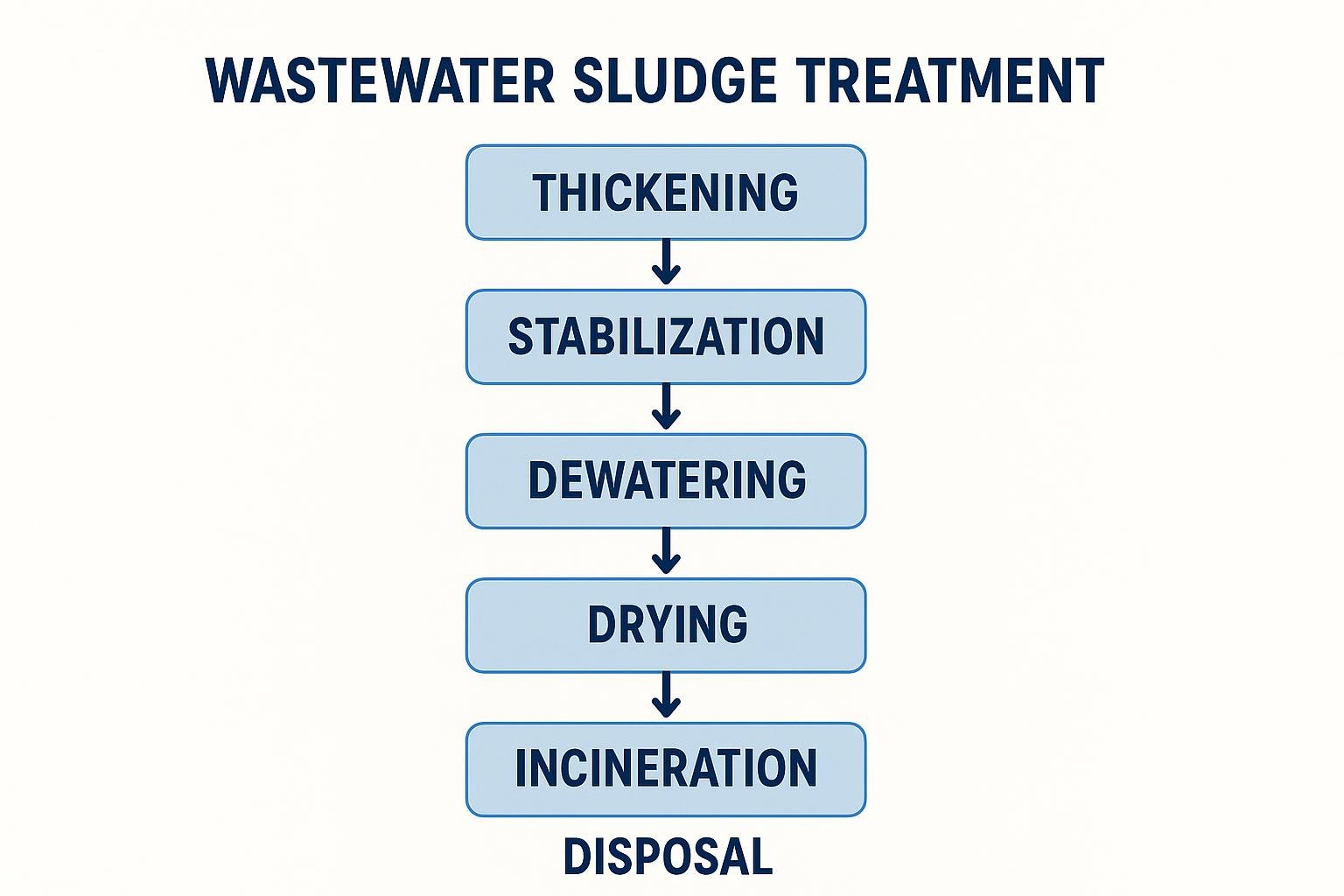
Wastewater sludge treatment is an essential part of wastewater management. It deals with the solids removed from wastewater during primary and secondary treatment. Proper treatment of this sludge reduces its volume and harmful effects, making it safer to handle or dispose of. This article explains what the treatment processes involve, how they work, and what practical challenges operators face.
What is sludge in wastewater treatment?
Sludge consists mainly of organic and inorganic solids separated from wastewater. There are two primary types: primary sludge and secondary sludge (also called activated sludge). Primary sludge settles out in sedimentation tanks in the early stages of wastewater treatment. Secondary sludge forms from microorganisms that consume organic matter during biological treatment.
Both sludge types have high water content, often 95% or more, making them bulky and difficult to treat. Removing excess water and stabilizing the organic material are two main goals of sludge treatment.
Collection and thickening
After sludge is formed, the first step is thickening. Thickening increases the solids concentration and reduces volume. This happens in thickening tanks or by gravity thickening, where sludge solids settle, and water is removed from the top.
Mechanical methods like centrifuges, belt filter presses, and rotary drum thickeners are also common. Thickening reduces transportation costs and improves the efficiency of downstream treatment steps.
Stabilization
Stabilization reduces the biological activity in sludge to minimize odors, pathogens, and potential for further decomposition. This step is important for health and environmental protection.
Common stabilization methods include anaerobic digestion, aerobic digestion, lime stabilization, and composting.
-
Anaerobic digestion involves bacteria breaking down organic material in the absence of oxygen. It produces biogas, mostly methane and carbon dioxide, which can be captured for energy. Digestion also reduces sludge volume and pathogens.
-
Aerobic digestion uses oxygen to support bacteria that consume sludge. This method is faster but requires more energy to supply aeration.
-
Lime stabilization involves raising the pH of sludge with lime. High pH kills pathogens and stabilizes organic matter but increases the volume of treated sludge due to added chemicals.
-
Composting mixes sludge with bulking agents like wood chips and maintains aerobic conditions to biologically stabilize the material. The process produces a soil-like product useful as a soil amendment if done properly.
Anaerobic digestion is widely used at larger plants because it reduces sludge volumes and recovers energy, but it requires careful control of temperature and retention time.
Dewatering
Even after thickening, sludge still contains too much water for direct disposal or reuse. Dewatering removes more water to create a solid cake that is easier to transport and handle.
Common dewatering equipment includes centrifuges, belt filter presses, screw presses, and plate and frame filter presses. The choice depends on sludge characteristics, plant size, and cost considerations.
Proper dewatering reduces landfill volumes or prepares sludge for beneficial reuse options like land application or incineration. However, dewatering can be limited by sludge composition. For example, filamentous bacteria can cause poor dewatering performance.
Pathogen reduction and final treatment
Before sludge can be safely disposed of or reused, pathogen levels must be minimized to meet regulatory standards. The U.S. Environmental Protection Agency (EPA) defines Class A and Class B biosolids standards depending on use.
Class A biosolids have very low pathogen levels and may be used with fewer restrictions, including for landscaping and agriculture. Achieving Class A often requires additional treatment like heat drying, composting, or pasteurization.
Class B biosolids have reduced but detectable pathogen levels and can be used with site restrictions.
Other final treatments include incineration and landfilling:
-
Incineration converts sludge solids into ash, destroying pathogens and reducing volume significantly. However, it requires pollution controls for air emissions and is energy-intensive.
-
Landfilling is a straightforward option but is declining due to landfill space limits and environmental concerns.
Operational challenges and considerations
Sludge treatment processes face several practical challenges:
-
Variable sludge composition can affect thickening and dewatering performance.
-
Odor control is critical, especially during stabilization and dewatering steps.
-
Energy consumption varies widely between aerobic and anaerobic processes, with aerobic digestion typically demanding more energy input.
-
Equipment maintenance for mechanical thickening and dewatering units is ongoing to prevent breakdowns.
-
Disposal regulations influence process choice and treatment level needed.
Operators monitor factors like temperature, pH, and retention time to maintain stable digestion. For example, improper temperature control in anaerobic digesters can cause process failure and odor release.
Environmental and health impacts
Treating sludge reduces environmental risks such as groundwater contamination and odors. Proper treatment also limits pathogen transmission to workers and the public.
However, untreated or poorly treated sludge can contribute to microbial contamination and nutrient pollution if applied to land without controls.
Some sludge may contain heavy metals or organic pollutants, which requires monitoring and sometimes pretreatment. Regulations set limits on these components before beneficial reuse is allowed.
Link to more information
For a detailed overview of treatment options and methods, see this article on wastewater sludge treatment.
The EPA provides comprehensive guidance on biosolids management and regulations. Visit their website for information on standards and best practices: EPA Biosolids.
The Water Environment Federation (WEF) offers technical resources related to sludge treatment processes, including operational considerations: Water Environment Federation.
Conclusion
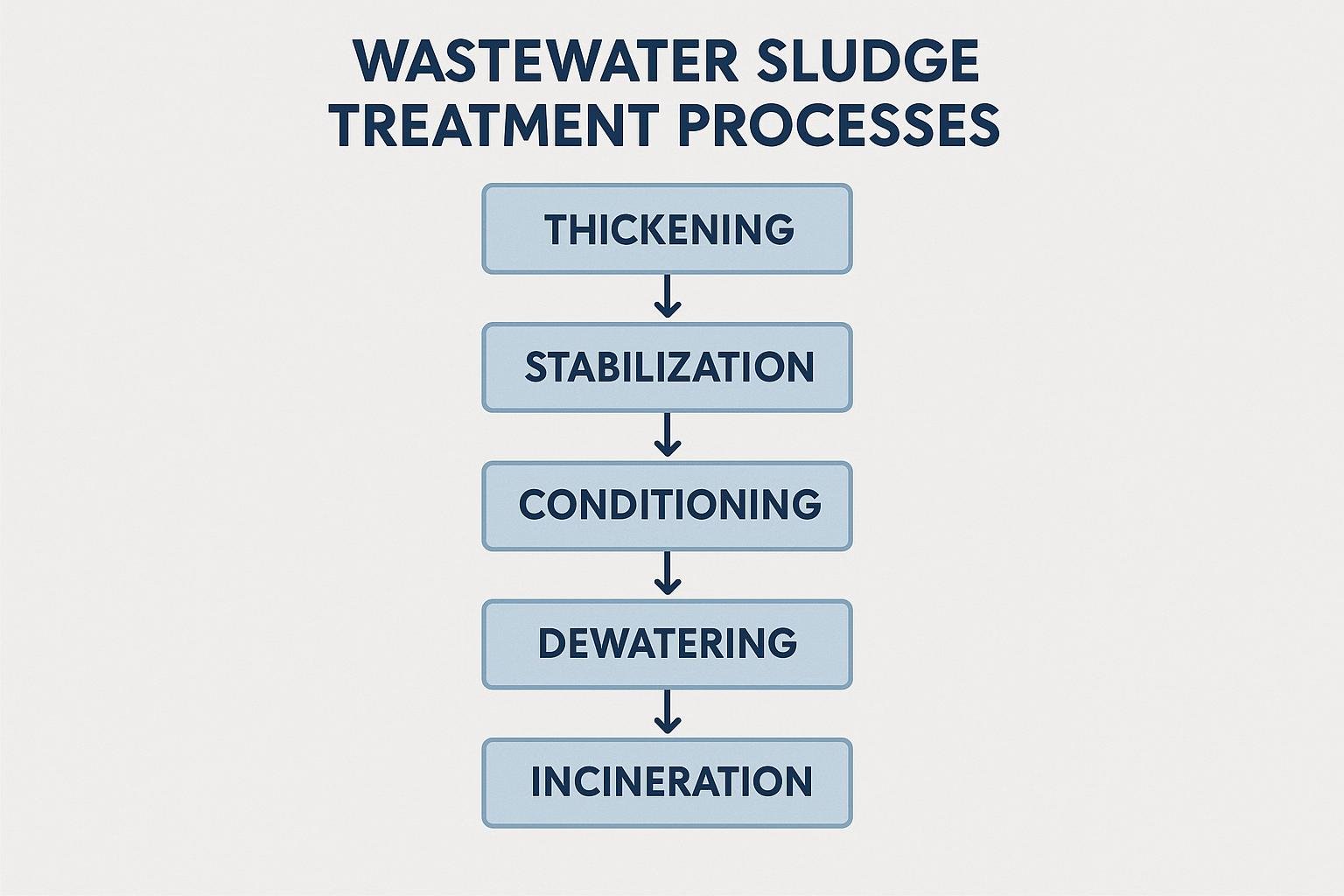
Wastewater sludge treatment includes steps to thicken, stabilize, dewater, and dispose of or reuse solids from wastewater. Each step has practical methods suited to different plant sizes and sludge characteristics. Effective treatment protects public health, reduces environmental impacts, and can recover energy from organic material. Operators must balance process efficiency, costs, and regulatory compliance in managing sludge treatment. Understanding these processes helps ensure better outcomes in wastewater management systems.