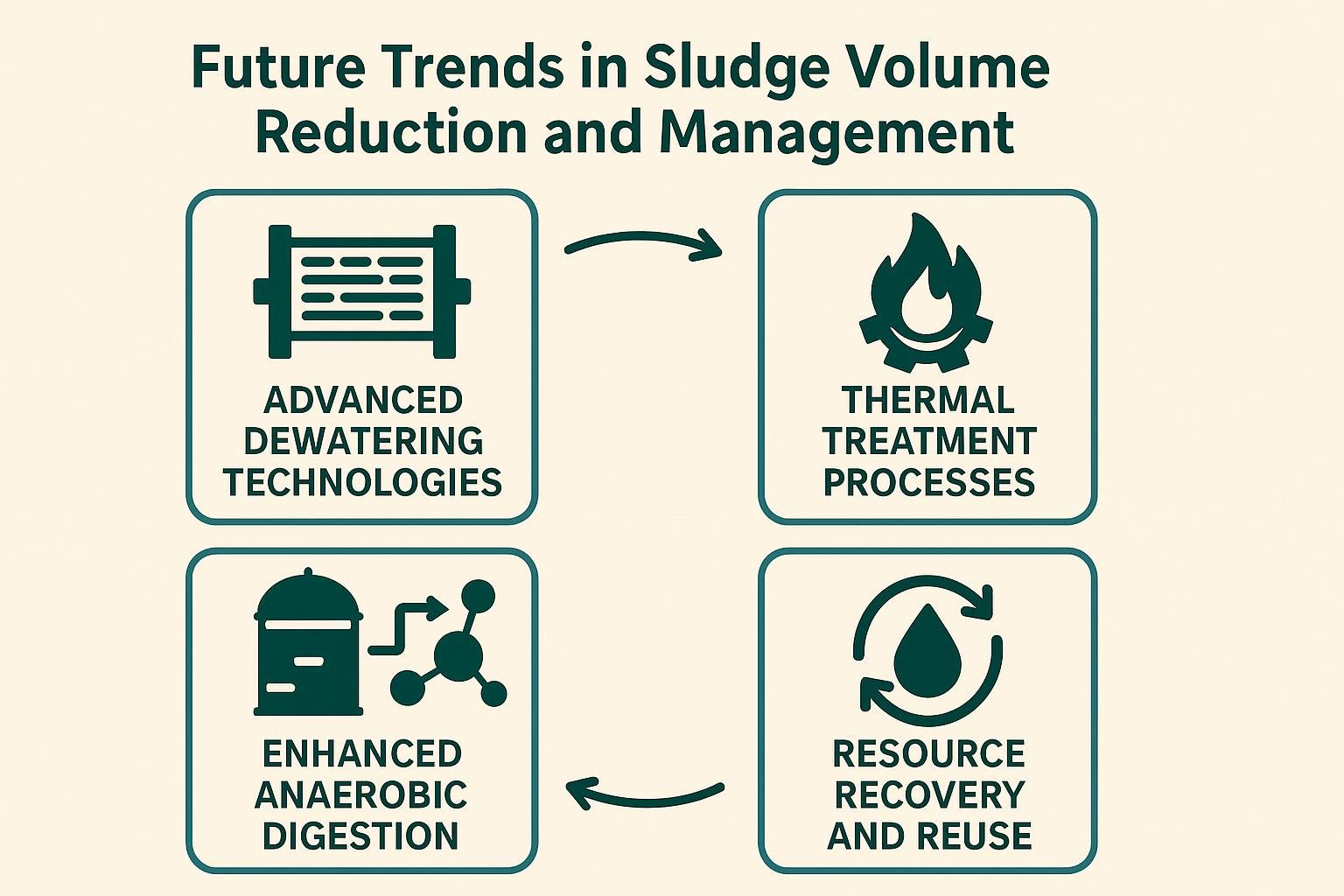
Sludge volume reduction and management remain critical challenges in water and wastewater treatment. Managing the solid waste generated during these processes affects operational costs, environmental safety, and regulatory compliance. This article explores current and future trends in sludge reduction and management methods, focusing on practical solutions, operational considerations, and their potential impacts.
Understanding Sludge Generation and Its Challenges
Sludge is a byproduct of wastewater and industrial treatment. It consists of organic and inorganic materials suspended or settled during various treatment stages. High volumes of sludge can increase disposal costs and environmental risks, especially if the sludge contains harmful contaminants.
Reducing sludge volume has several benefits. It lowers transportation and disposal expenses, decreases the footprint of treatment facilities, and reduces environmental hazards. However, sludge treatment must balance volume reduction with maintaining sludge stability and minimizing odors or pathogen risk.
Emerging Technologies for Sludge Volume Reduction
Several technologies show promise in reducing sludge volume more effectively than traditional methods. These technologies focus on breaking down sludge solids or improving dewatering processes.
1. Advanced Digestion Techniques
Anaerobic digestion is widely used to reduce sludge volume by breaking down organic matter in the absence of oxygen. New approaches, such as thermophilic digestion (operating at higher temperatures), can enhance the breakdown rate, reducing sludge volume further than mesophilic digestion.
Another digestion method gaining attention is enzymatic treatment, where enzymes help accelerate organic matter hydrolysis before digestion. Pre-treatment steps like thermal hydrolysis or ultrasonic treatment can also enhance digestion efficiency by making solids more accessible.
2. Mechanical Dewatering Improvements
Dewatering reduces sludge water content, shrinking volume and weight. Technologies like centrifuges, belt filter presses, and screw presses are common. Future trends include optimizing these devices with smart sensors and automation to improve performance and reduce energy consumption.
Recent research is exploring the use of polymer aids that improve solids separation during dewatering. Choosing the right polymers can improve sludge dryness without adding excessive costs or chemicals.
3. Chemical Conditioning
Chemical conditioning adds agents like lime, ferric chloride, or polymers to improve sludge handling, reduce odors, and stabilize organic matter. Emerging hybrid conditioning methods combine chemical and mechanical processes to optimize sludge reduction.
While effective, chemical conditioning requires careful monitoring to avoid increasing the volume of chemical residues, which can complicate sludge disposal.
Sludge Management Practices
After volume reduction, managing the leftover sludge involves safe handling, treatment, and disposal or beneficial reuse.
Land Application
Many treatment facilities apply stabilized sludge as fertilizer or soil amendments. This approach recycles nutrients and organic matter but requires strict control to prevent pathogen transfer and heavy metal contamination. Regulations on land application vary by region but generally include limits on contaminant levels and application rates.
Incineration
Incinerating sludge reduces volume dramatically by converting solids to ash and gases. It requires significant energy and air pollution controls, but it effectively destroys pathogens and organic pollutants.
The future may see integration of energy recovery systems with incinerators to make the process more sustainable. However, public acceptance and regulatory hurdles remain challenges.
Landfilling
Landfill disposal is the last resort due to space use and long-term liability concerns. Many jurisdictions aim to minimize landfill sludge disposal by promoting volume reduction and reuse methods.
Operational Considerations for Future Adoption
Implementing new sludge volume reduction or management methods requires evaluating cost, operational complexity, and environmental impact.
-
Cost and Energy Use: Advanced digestion or mechanical improvements often demand higher initial investments and energy. Balancing these increases against savings from lower disposal costs is necessary.
-
Sludge Characteristics: Different sludge types (municipal, industrial, agricultural) respond differently to treatments. Customizing approaches based on sludge composition enhances performance.
-
Regulatory Compliance: Emerging restrictions on contaminants, disposal methods, and emissions can affect which technologies are viable.
-
Equipment Integration: Combining pretreatment, digestion, and dewatering steps must consider how each stage interacts. For example, pre-treatments improving digestion might create challenges for subsequent dewatering.
-
Monitoring and Automation: Integrating sensors and automation facilitates process control and optimization, leading to better sludge volume reduction and lower operational risk.
Case Study: Thermal Hydrolysis in Large-Scale Plants
Thermal hydrolysis uses high pressure and temperature to break down sludge cells before digestion. Facilities using this technology have reported up to 40% reduction in sludge volume combined with increased biogas production.
One example includes the Blue Plains Advanced Wastewater Treatment Plant in Washington, D.C., which uses thermal hydrolysis followed by anaerobic digestion. This approach has improved sludge handling, reduced disposal needs, and enhanced energy recovery.
This case illustrates how investing in combined technologies can make sludge management more efficient yet requires strong operational expertise.
Environmental and Health Impacts
Reducing sludge volume has direct environmental benefits like lower greenhouse gas emissions from transportation and disposal. However, sludge treatment processes themselves can produce emissions or byproducts requiring control.
Future trends emphasize safer and cleaner processes that minimize air and water pollution. For example, biogas capture from digestion reduces methane emissions, a potent greenhouse gas.
Continued research into sustainable sludge management supports improvements in air quality, soil health for land application, and reduced public health risks from pathogen exposure.
Research and Development Directions
Ongoing research aims to develop methods that improve sludge volume reduction, reduce operational costs, and enhance environmental safety simultaneously. For those interested, the National Academies provide comprehensive waste management research covering sludge treatment innovations, policy, and environmental impacts.
Additional resources on sludge management can be found through the U.S. Environmental Protection Agency’s wastewater section: https://www.epa.gov/wastewater-sludge.
The Water Environment Federation (https://www.wef.org/resources/for-the-public/faqs/faq-sludge/) also offers detailed practical resources on sludge treatment and disposal.
Conclusion
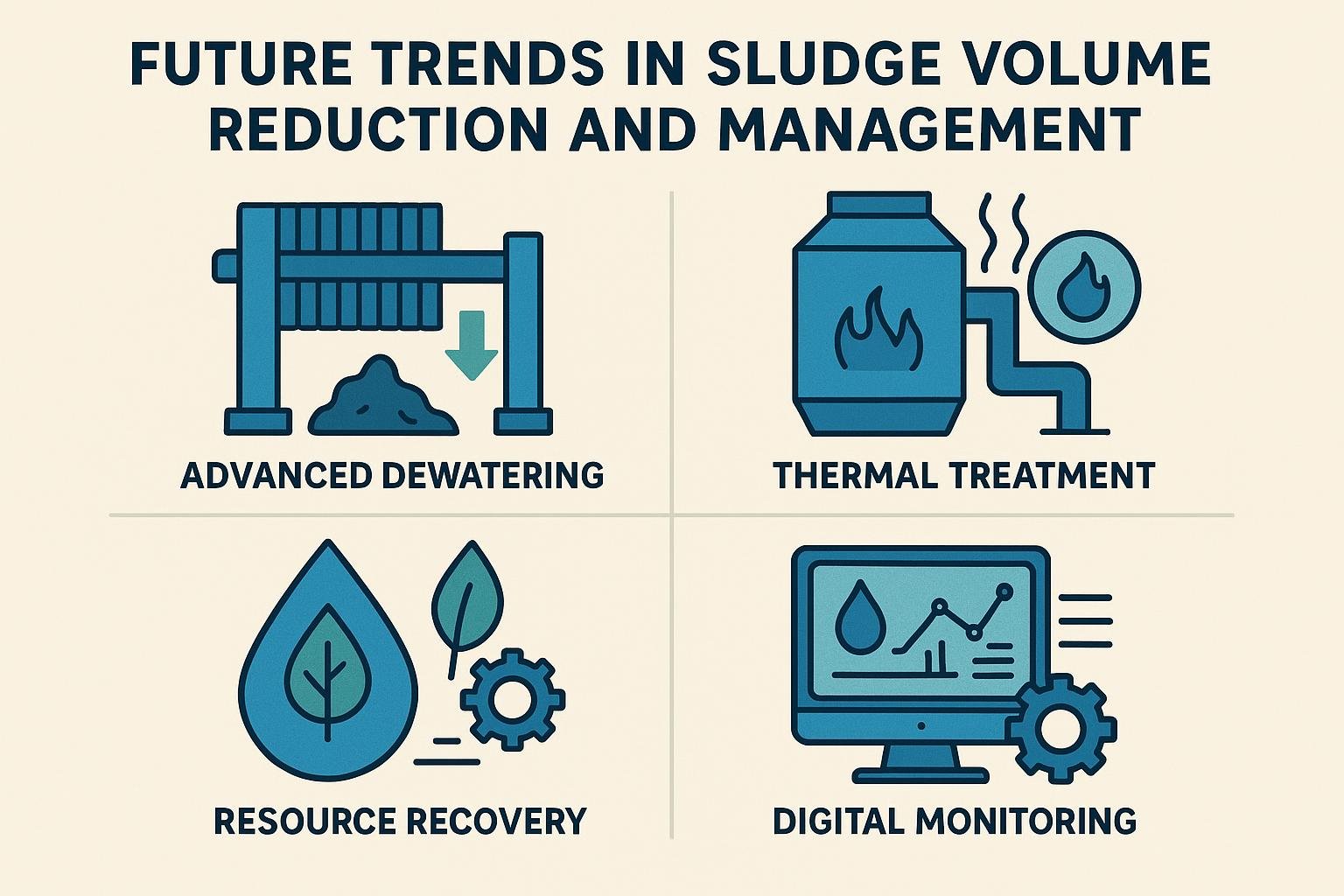
Future trends in sludge volume reduction and management focus on integrating improved digestion techniques, advanced dewatering, and sustainable disposal or reuse strategies. Operational considerations, environmental impacts, and regulatory frameworks will shape technology adoption.
Facilities may benefit from combining methods like thermal hydrolysis with anaerobic digestion and optimized dewatering. Monitoring and automation will support efficiency gains and cost control.
Understanding sludge characteristics and local regulations remains essential for choosing appropriate volume reduction and management methods. Continued research and experience sharing will help the water and wastewater treatment industry manage sludge in safer, cleaner, and more cost-effective ways.