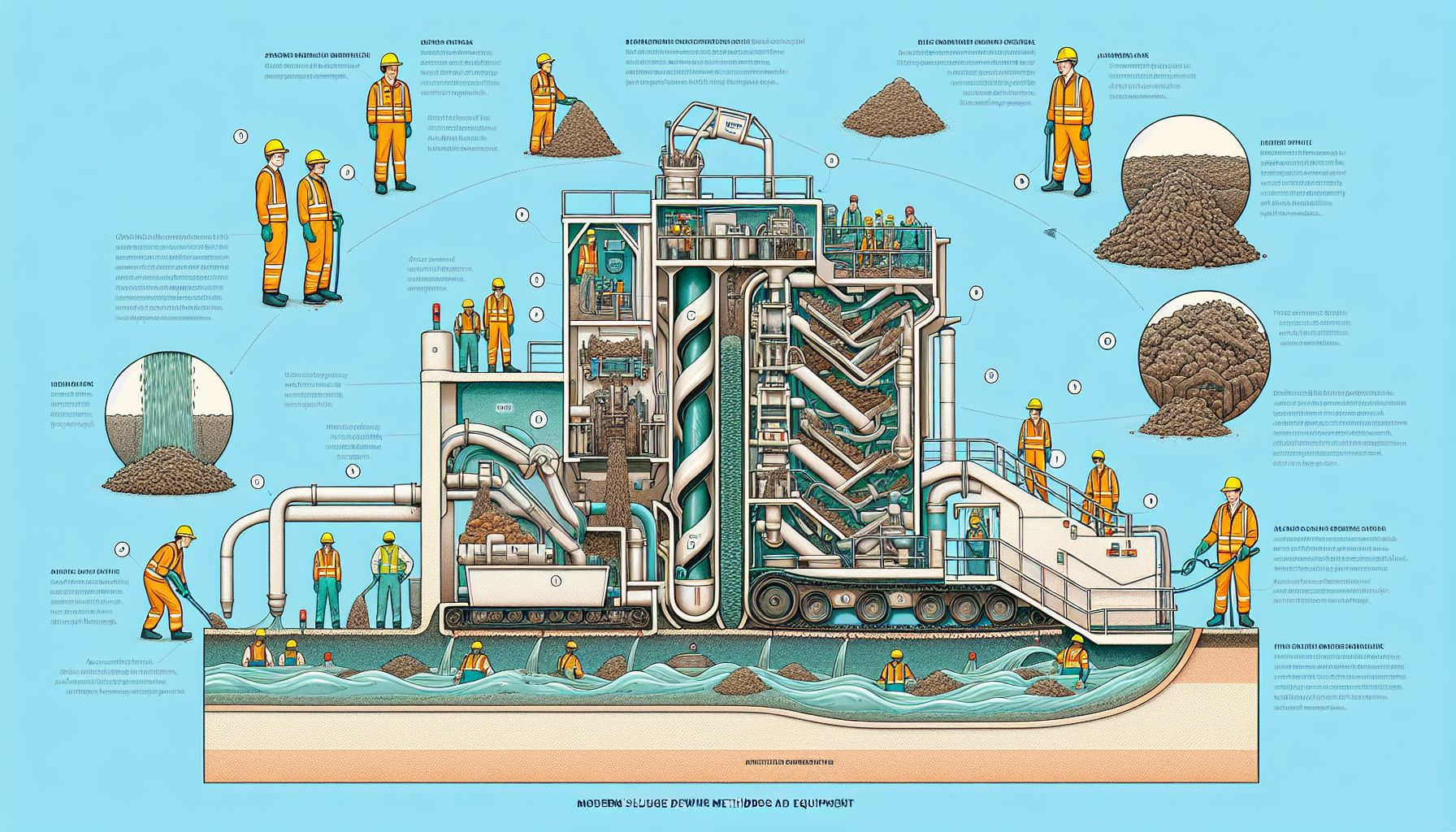
Sludge dewatering is a critical step in the wastewater treatment process and the modern methods available are designed to reduce the water content, volume, and weight of the waste, making it easier to handle and less expensive to transport and store. In treating wastewater, the final step is sludge dewatering, the removal of water from the sludge collected in the treatment process.
Today, with advances in technology, many modern methods have been developed to make the process more efficient and environmentally friendly. The knowledge of these methods and their corresponding equipment can be vital to wastewater management professionals.
Overview of Sludge Dewatering
At the heart of sludge dewatering are two primary objectives. The first is volume reduction, which focuses on lessening the overall size of the sludge. The second is the enhancement of physical characteristics, which includes the diminishing of stickiness and pastiness of the sludge. This makes it suitable for further treatment or disposal.
Wastewater contains around 99% water and just 1% solid matter. In essence, the purpose of sludge dewatering methods is to extract as much water as possible from the sludge to minimize its volume. The dewatered sludge can then be processed further or directly disposed of.
Modern Dewatering Methods and Equipment
There are several modern techniques utilized in the sludge dewatering process. Each of these techniques employs a specific type of equipment, all with their unique benefits and drawbacks.
Centrifugation
Centrifugation is a method where dense components of the waste are separated from the watery parts resulted by using the centrifugal force. The equipment used is typically a decanter centrifuge, which with its high rotational speed, separates the solid waste from the water. Decanter centrifuges are preferred for their relatively low operational cost and ease of automation, but they do consume more energy than other methods.
Filter Presses
A Filter press is a piece of equipment that uses pressure and a series of filters to remove water from the sludge. The sludge is pumped into a closed container where it is pressed between numerous cloths, or filters. Water is squeezed out of the sludge and captured, leaving behind solid material. Filter presses are appreciated for their effectiveness and high-quality output, but they can be time-consuming and require regular maintenance.
Belt Presses
A belt press works by rolling the sludge between two belts under high pressure to squeeze out the water. This equipment has the advantage of continuous operation and low power consumption. However, sludges with high oil content may damage the belts, leading to more frequent replacements.
Screw Press
A screw press uses a screw mechanism to press the sludge against a screen, forcing out the water. The solid waste is then discharged at the other end. This type of equipment is often chosen for it’s easy to use and maintain and has low noise and vibration levels. However, screw presses can have high power requirements and may struggle with high-volume operations.
Key Considerations for Choosing Dewatering Methods and Equipment
The selection process consists of various factors. These include the type of sludge to be treated, the volume of sludge, operational costs, and environmental considerations.
While it is pivotal to weight cost-effectiveness, it’s also crucial to think about the environmental impact. Less energy-consuming methods may prove more sustainable, contributing to a greener footprint for the wastewater treatment plant.
The Environmental Protection Agency offers comprehensive information on sludge treatment, which can provide a deeper understanding of these considerations.
Furthermore, the dewatering equipment should also be scrutinized for reliability, durability, and ease of maintenance. The University of California, Davis, provides an in-depth understanding of wastewater treatment technologies, including sludge dewatering.

To Sum Up
The right sludge dewatering method and equipment can make a significant difference in both the operation efficiency and environmental impact of a wastewater treatment facility. Whether using centrifugation, filter presses, belt presses, or screw presses, understanding the merits and limitations of each can help in making an informed decision.
Bearing in mind environmental impacts, operational costs, and the type of sludge to be treated, wastewater management professionals can optimize their processes. With a strong grasp of modern sludge dewatering methods and equipment, it’s possible to achieve efficient and environmentally friendly wastewater treatment.